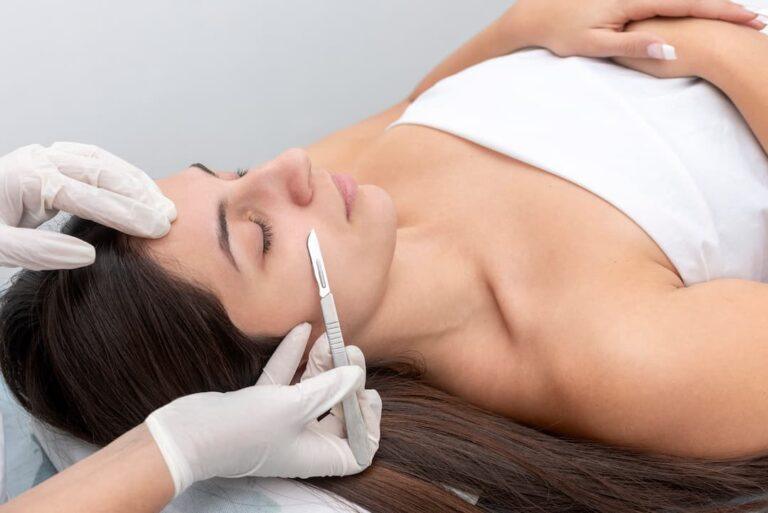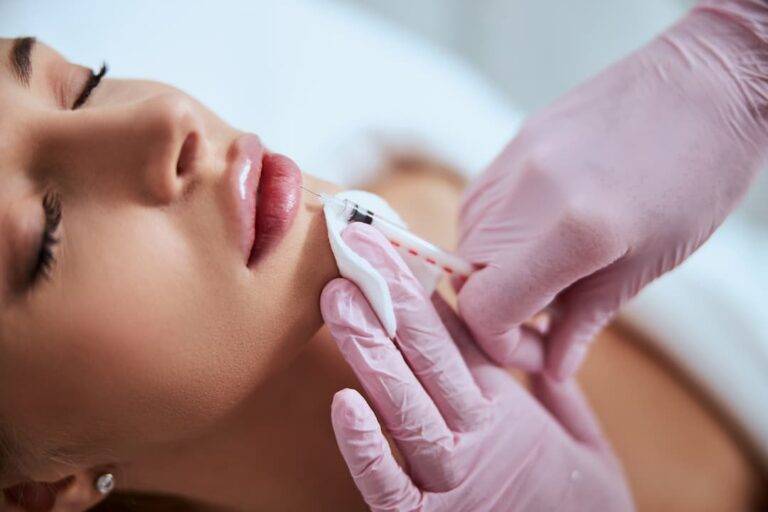

Microneedling can soften the appearance of acne scarring, surgical scars and stretch marks by prompting your skin to lay down new collagen in the affected area. It won’t erase them, and anyone who tells you otherwise is selling you something. What it can do, over a course of treatments, is improve texture and make the marks less noticeable against the surrounding skin.
I’m Claire, and I run CLT Natural Aesthetics from my clinic on Thompson Road in Bognor Regis. I spent over three decades working in the NHS and private healthcare as a dental hygienist before moving into aesthetics,which means I came to this work with an existing grounding in anatomy, infection control and how tissue actually heals. That background shapes how I approach scarring in particular, because scar tissue does not behave like ordinary skin and it needs treating differently.
Scars form when your skin repairs itself in a hurry. The collagen it produces during that emergency repair is laid down in dense, disorganised bundles rather than the neat basketweave pattern of undamaged skin. That’s why a scar looks and feels different: the texture, the colour and often the level of the skin surface have all changed.
Microneedling works by creating thousands of controlled micro-channels through that tissue. Your body reads them as fresh injuries and starts a new repair cycle, but a slow and organised one this time rather than a panicked one. The collagen and elastin produced during that second cycle is better arranged than the original scar tissue, which is what gradually improves the texture.
The needling itself does very little. The results come entirely from how your skin responds to it over the following weeks and months.
Not all scarring behaves the same way, and I’d rather tell you that at the consultation than take your money for something unlikely to work.
Atrophic acne scarring, the indented type, tends to be the most rewarding to treat. Rolling scars with soft, sloping edges usually respond well. Boxcar scars, which have sharper walls, respond reasonably. Ice pick scars, which are narrow and very deep, respond least well to needling alone and may need a different approach entirely.
Post-inflammatory pigmentation left behind by old spots is not scarring at all, even though people usually describe it that way. It’s discolouration, and it often fades on its own. We will tell you if that’s what you’re actually looking at.
These need to be fully healed and mature before We will go near them. As a general rule I want at least six months since the wound closed, and preferably longer, because a scar continues to remodel on its own for well over a year and We don’t want to interfere with a process that’s still working.
Raised scars are a different matter. If you have any history of keloid scarring, microneedling is not appropriate and I won’t offer it, because deliberately injuring skin that overreacts to injury is a poor idea.
Stretch marks, or striae, form when skin is stretched faster than it can adapt, most commonly during pregnancy, adolescent growth spurts, rapid weight change or bodybuilding. The dermis tears beneath an intact surface.
Newer stretch marks, the red or purple ones known as striae rubrae, still have an active blood supply and living cells in the area. They respond considerably better to needling than mature ones. Older stretch marks, the silvery-white striae albae, have lost most of that vascular activity and behave much more like established scar tissue. Improvement is still possible but it is slower, more modest, and takes more sessions.
If your stretch marks are still red, this is the window. If they turned white years ago, I’ll be honest with you at consultation about what a realistic outcome looks like, and it will be an improvement in texture and appearance rather than removal.

Everything starts with a consultation. I’ll look at the area properly in good light, ask about your medical history, any medication you’re on and how the scarring came about, and check for anything that would make treatment unsuitable. Nobody is treated on the same day as their first consultation.
On treatment day I clean the area thoroughly and apply a topical numbing cream, which needs around 20 to 30 minutes to take effect. Most people find the face more sensitive than body areas, and bony regions such as the forehead or shin more uncomfortable than fleshy ones. It’s a scratchy, prickly sensation rather than a sharp one.
Needle depth is adjusted to the area and the type of scarring, since facial skin and abdominal skin are nothing alike in thickness. A session usually takes between 45 and 90 minutes depending on how much ground we’re covering.
Afterwards your skin will look and feel like moderate sunburn: red, warm and tight. That settles substantially within 24 to 48 hours on most people, though body areas can stay pink a little longer.
For the first 24 hours, leave the area alone. No make-up over treated facial skin, no gym, no swimming pool, no sauna, no hot bath. Sweat and chlorine on freshly needled skin invites problems.
Wash gently with lukewarm water and a plain cleanser. Skip anything active for around a week: no retinoids, no vitamin C serums, no acids, no exfoliating scrubs.
Sun protection is not optional. Newly needled skin pigments very readily, and there is no faster way to undo the work than to expose it unprotected. If we’re treating an area that will be in the sun, use a high-factor SPF and keep it covered where you can. For stretch marks on the abdomen or thighs, that’s straightforward for most of the year. In summer it takes a bit more discipline.
Most people treating scarring need a course rather than a single appointment. Three to six sessions spaced four to six weeks apart is a common pattern, with the gap allowing one repair cycle to finish before the next begins.
You won’t see much after the first session beyond a temporary glow from the swelling. Real change appears gradually from around the six to eight week mark, and collagen remodelling continues for several months after your final session. This is a slow treatment. If you need something dramatic before an event in a fortnight, this isn’t it.
Pricing depends on the size of the area treated, and I’ll give you a clear figure at consultation before you commit to anything.
All treatments at CLT Natural Aesthetics are delivered with a strong focus on safety, professionalism and clinical care.
Claire’s medical background ensures that:
This ensures your skin is supported safely while achieving the best possible results.
We will decline treatment if you have any history of keloid or hypertrophic scarring, an active skin infection, an active flare of eczema or psoriasis in the treatment area, or untreated active acne in the area. We also won’t treat during pregnancy or while you’re breastfeeding.
If you’ve taken oral isotretinoin, commonly known by the brand name Roaccutane, We want at least six months between finishing the course and any needling. If you’re on blood thinners or have a bleeding disorder, tell us at consultation, because it changes what’s sensible.
Microneedling doesn’t rely on heat or light targeting pigment in the skin, which is why it’s generally considered a lower-risk option for deeper skin tones than many resurfacing treatments. That said, the risk of post-inflammatory hyperpigmentation is not zero, and it rises if the treatment is too aggressive or if the skin is exposed to sun afterwards. We treat conservatively for this reason and We would rather build results over an extra session than push too hard in one.
You’ll still look like yourself, just more like the you that you recognise.
If you have any queries about the services at CLT Natural Aesthetics, then you can view some frequently asked questions below. Still can’t find the answer you were looking for? Contact me and I will be happy to help.
Yes, to a degree. Microneedling stimulates new collagen production in the damaged dermis, which can improve the texture and appearance of stretch marks over a course of sessions. It does not remove them. Newer red or purple stretch marks respond noticeably better than older white ones.
Most people need between three and six sessions, spaced four to six weeks apart. The number depends on how deep the scarring is and what type it is. Rolling scars usually need fewer sessions than boxcar scars, and ice pick scars often need a different treatment approach altogether.
No treatment removes stretch marks completely, and older white stretch marks are the hardest to improve because the tissue has lost most of its blood supply and cellular activity. Microneedling can still soften their appearance and improve the surrounding texture, but expect gradual, partial improvement rather than removal.
It’s uncomfortable rather than painful for most people. A topical numbing cream is applied around 20 to 30 minutes beforehand, which takes the edge off considerably. Scar tissue can be less sensitive than surrounding skin in some cases and more sensitive in others. Bony areas tend to be the least comfortable.
Visible change usually starts around six to eight weeks after the first session, because new collagen takes that long to form and organise. Improvement continues for several months after the final session in a course. Anything you notice in the first few days is swelling rather than a result.
Yes, once you’ve finished breastfeeding and your body has settled, which is typically several months after birth. Postpartum stretch marks are often still red or purple at that stage, which is the point at which they respond best to treatment.
Expect redness, warmth and a tight sunburn-like feeling for 24 to 48 hours, sometimes a little longer on body areas than on the face. Avoid the gym, swimming, saunas and hot baths for the first day. Most people are comfortable in normal clothing straight away.
Microneedling is generally considered lower risk for deeper skin tones than light or heat-based resurfacing, because it doesn’t target pigment. There is still a risk of post-inflammatory hyperpigmentation, so treatment should be conservative and sun protection afterwards is essential.
If you’re considering microneedling for scarring or stretch marks, come and have a proper conversation about it first. We will look at the area, tell you honestly what I think is achievable and what isn’t, and if we don’t think the treatment is right for you we‘ll say so.
Get in touch to book a consultation at CLT Natural Aesthetics clinic on Thompson Road.
Call today if you’d like any more information or to book your free consultation.